
By Moana Ellis, Radio New Zealand
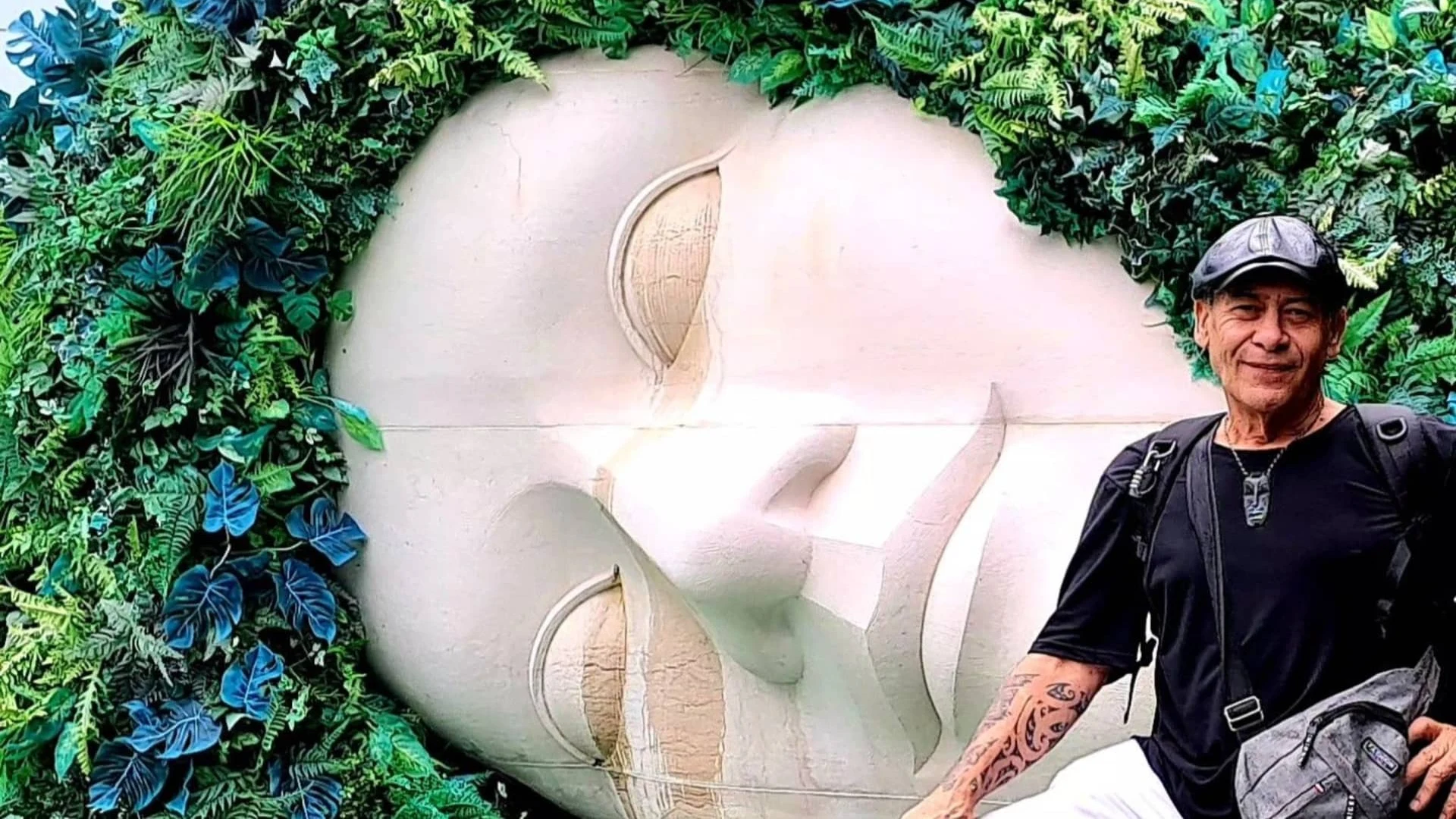
Main image: Carver Julian ‘Judd’ Bailey is one of a host of creatives and artists whose work is sold internationally and seldom seen at home in Whanganui. Photo credit: Supplied
Whanganui kaiwhakairo (carver) Julian ‘Judd’ Bailey is bringing together 30 of Whanganui’s master creatives for a rare local showcase as part of the inaugural Festival of Design Aotearoa.
The Festival of Design Aotearoa is New Zealand’s first national design festival.
He Puna Tohunga – 'The Well of Master Creatives' features centrally as part of the festival.
Its focus is on indigenous and contemporary designers and artists whose work is often commissioned, exhibited and sold internationally, giving New Zealand audiences an opportunity to experience their talent close to home.
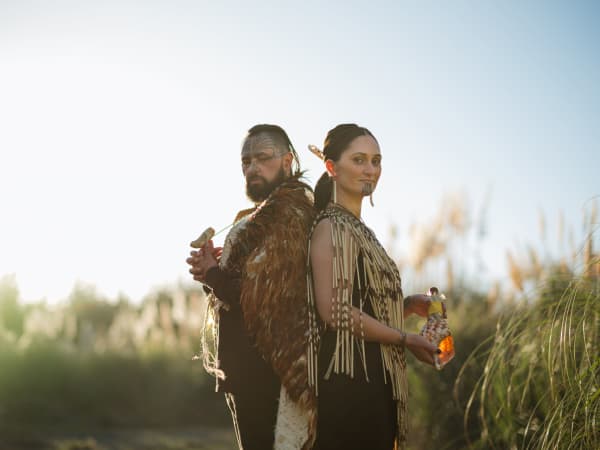
An exhibition curated for the inaugural Festival of Design Aotearoa will show top-shelf talent that people just don't know about, including performing artists Jerome Kavanagh and his wife Ruiha Turner. Image Supplied
“There’s 30 of them in this show,” Bailey said during a break from his whakairo workshop in Whanganui.
“To get talent together like this is amazing. They are top-shelf.”
The exhibition, opening as part of the 10-day festival from 16-25 October, celebrates tohunga and master practitioners who whakapapa to or are from Whanganui.
Much of the work produced by the artists is destined for international audiences, with limited opportunities for local people to see it, Bailey said.
“They are selling online, establishing their own markets. They don’t market here at all, their work’s rarely seen locally.
“There’s all this talent here in Whanganui that people just don’t know about.”
The exhibition brings together a diverse range of disciplines, including raranga (weaving), whakairo (carving), tāmoko, glass, fine art, photography and sound recording.
Among the featured practitioners are tāmoko and whakairo artist Hemi Te Peeti, printmaker Graham Hall, raranga practitioner Emily Huwyler, glass artist David Traub, Pākaraka carver Jason Hina, and photographer and sound recordist Sacha Keating.
Bailey said the works reflected whakapapa, cultural knowledge, innovation and artistry.
“He Puna Tohunga is quite eclectic. It’s really quite a nice collection.”
A carver himself, Bailey specialises in wearable art made from bone, pakohe, pounamu and Asian minerals and hardstone. He has been carving for more than 40 years, including traditional whakairo rākau at marae throughout the rohe.
A graduate of the celebrated Whanganui School of Design, where he completed bachelor honours and master’s degrees, Bailey initially focused on graphic design before making stone carving his livelihood.
He now divides his time between Pūtiki and Japan, where he has established a second carving base.
“I’m full-on busy all the time with orders, and in and out of Japan twice a year.”
Curating the exhibition had been a privilege, he said.
“We are lucky to be able to get these legends together in one place. We’re just so lucky to have this sort of talent.”
Bailey hopes the exhibition will help build momentum for a permanent centre of excellence in Whanganui, where practitioners across creative disciplines could learn from one another, exhibit their work and sell directly to the public.
The wider festival programme features more than 50 events across Whanganui and Palmerston North, building on Whanganui’s status as New Zealand’s only United Nations Educational, Scientific and Cultural Organization (UNESCO) City of Design.
The festival has been organised by a small team of Whanganui District Council staff, and funded by $300,000 from the Government Events Boost Fund, $100,000 from Whanganui District Council and $30,000 from Palmerston North City Council.
Festival director and Whanganui council visitor experiences manager Sam Ryan said the programme had grown beyond initial expectations, combining public events and family-friendly activities with international design gatherings.

Festival of Design Aotearoa director Sam Ryan. Supplied / Whanganui District Council
“It’s a much larger programme than was originally anticipated. We are really thrilled.”
The festival will include exhibitions, workshops, public installations, markets, interactive creative experiences and after-dark light displays, with many events free to attend.
Whanganui’s design heritage will also be celebrated through the 40th anniversary reunion of the Whanganui School of Design, with more than 150 alumni and staff expected to attend.
Although the reunion itself is a private event, Ryan said the school’s legacy was woven throughout the festival programme, including its two-day Designing Tomorrow Summit.
Four of the summit’s 12 keynote speakers are alumni or former staff, including former tutor Professor Tom Eslinger, now based in Chicago, and graduates Johnson Witehira and Kris Sowersby.
“It’s quite an awesome thing – some of them haven’t been here for many a year,” Ryan said.
Established in 1987 by Professor Hazel Gamec, the Whanganui School of Design was the first institute of its kind in New Zealand and remains an important part of the city’s creative identity.
Whanganui won UNESCO City of Design status in 2021, joining an international network of 53 recognised cities.
Ryan said the festival aimed to make design accessible to everyone, not just industry professionals, while creating opportunities for international connections and future collaborations.
The festival begins on Thursday 16 October, with a pōwhiri in the forecourt of the Whanganui War Memorial Centre, followed by the official opening at Te Whare o Rehua Sarjeant Gallery.
LDR is local body journalism co-funded by RNZ and NZ On Air
Discover more Creative Māori events HERE